


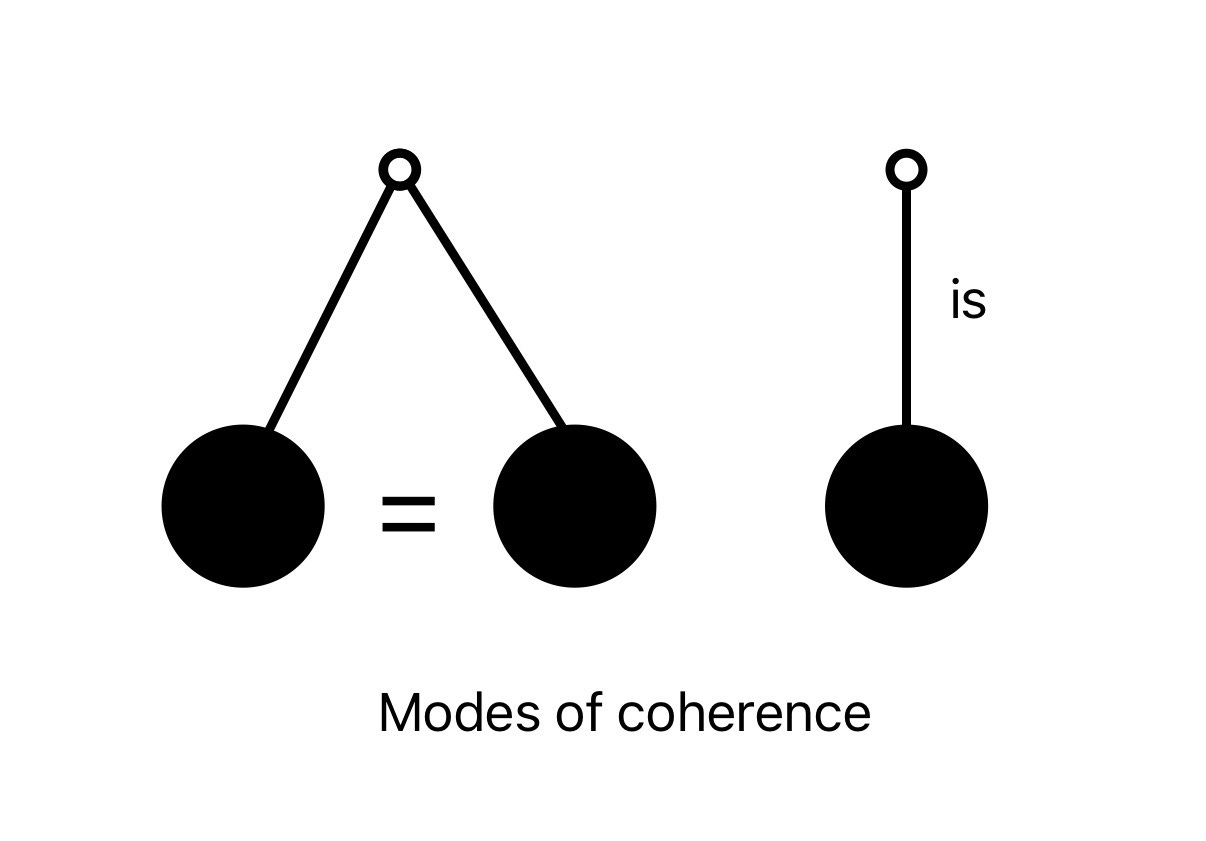
Objectivity is not a preference, a moral stance, or a social agreement. It is a structural requirement for intelligibility. To say that something is objective is to say that it holds regardless of belief, perspective, or interpretation. It is to say that reality places constraints on what can be true. Facts are the most basic expression of this constraint. A fact is not merely a statement we accept; it is a state of affairs that is the case whether anyone acknowledges it or not. If facts did not exist independently of minds, the distinction between truth and opinion would collapse, and discourse would lose its footing altogether.
Facts therefore presuppose objective reality. A claim can only be factual if there is something about reality that determines whether it is true or false. Without objective reality, statements do not correspond to anything; they merely express attitudes, narratives, or preferences. This is why even the denial of facts depends on objectivity reality. To say “there are no facts” is itself presented as a fact, revealing the contradiction. Disagreement, correction, and learning all presuppose that reality is structured in a way that can arbitrate between competing claims.
Objectivity, in turn, implies coherence. For facts to exist, reality must hang together in a stable, non-contradictory way. Events must have identity across time, properties must remain consistent, and relations must be governed by regularities rather than arbitrariness. If coherence were absent, facts could not persist long enough to be recognized, and truth would be indistinguishable from accident. Reason itself presupposes coherence; to reason is to move from one claim to another while preserving consistency and non-contradiction. A world without coherence would not merely be confusing, it would be unintelligible.
Coherence cannot be manufactured by agreement or enforced by power. A society can coordinate around falsehoods, and institutions can impose narratives, but coherence is not created that way. It is either there or it is not. A coherent system is one in which the rules governing relations do not contradict the relations they govern. This immediately raises a structural requirement: the source of coherence cannot be internal to the system it organizes. Any rule derived from within the system will inherit the system’s contingency and circularity.
This is why coherence implies a neutral and independent reference point. In any domain—logic, mathematics, or science—the standard that governs the system is not one of the system’s elements. A measuring stick does not define its own length. A rule does not justify itself by appealing to what it regulates. If it did, coherence would collapse into self-reference. For objectivity to be preserved in any scenario, the grounding standard must be external, invariant, and independent of the elements it orders.
This requirement scales beyond local systems. Subsets inherit coherence from supersets. Scientific theories inherit coherence from mathematical and logical structures. Those structures, in turn, presuppose more fundamental constraints. This cannot regress indefinitely. If coherence were only ever borrowed and never grounded, it would evaporate. The chain must terminate in something that does not derive coherence from anything else, but from which all other coherence flows.
At the level of reality as a whole, this implies a single ontological anchor upon which coherence is objectively applied thru a one to many vector relationship. Multiple independent sources of coherence would introduce the possibility of contradiction at the foundation. If coherence itself were plural, reality would fracture at first principles and ultimately be inconceivable. Universality therefore requires singularity. Stability requires invariance. Grounding requires non-derivation and independence. Whatever fulfills this role cannot be an object within reality, because all things that exist are already contingent and relational. It cannot be temporal, spatial, psychological, or cultural, because all of those presuppose coherence rather than generate it.
Reason itself depends on this structure. To reason is not to invent order, but to align with it. Error is misalignment. Confusion is incoherence. Understanding is recognition of what already holds. The mind does not create facts; it discovers them by orienting itself correctly within reality’s structure. When this structure is ignored, reason does not disappear, it becomes unmoored. Calculation continues, but justification collapses. Power fills the vacuum left by coherence.
This is the proper meaning of God. Not a narrative figure, not a cultural identity, and not a psychological projection, not a theological belief, but the necessary ontological reference point that grounds objectivity, coherence, and facticity itself. God is not a being among beings, but the condition that makes beings intelligible, that makes reality coherent. Not an explanation added to reality, but the precondition that makes explanation possible at all. In this sense, God is not opposed to reason. God is the compass of reason, the fixed point by which thought can orient without collapsing into arbitrariness or domination.
Objectivity implies facts. Facts imply coherence. Coherence implies a neutral, independent grounding structure. And that structure, by necessity, is singular, external, invariant, non-derivative, and independent. This is not theology imposed on reality; it is ontology taken seriously. To align with it is clarity.