


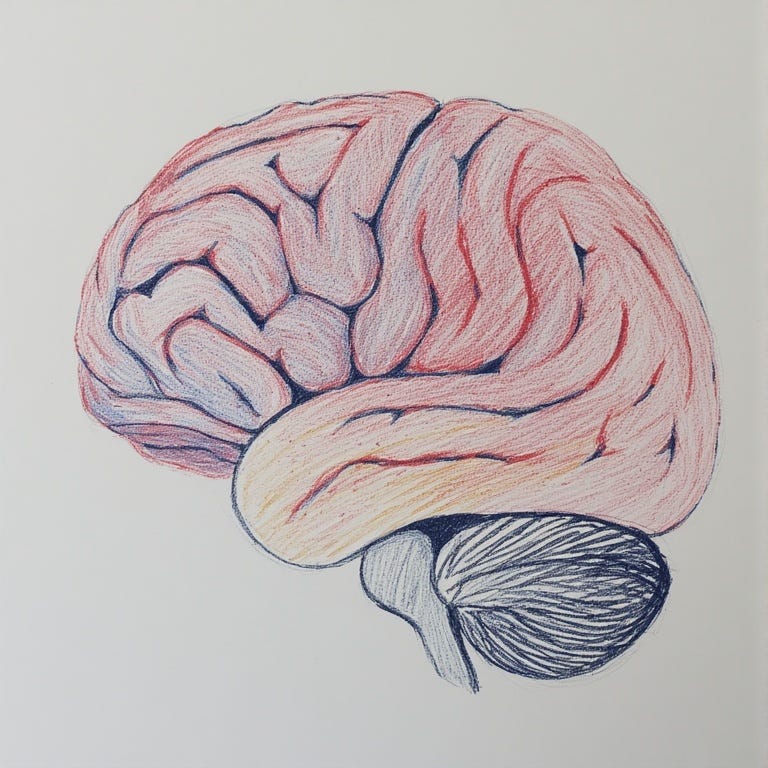
Modern psychology has developed through clear stages of progress. In the early twentieth century, behaviorism dominated the field. Human beings were studied as stimulus-response machines, with little attention to interior thought or meaning. The rise of cognitive science in the mid-century marked a revolution: it became clear that thought patterns shape behavior, and that maladaptive cognition can perpetuate suffering. Cognitive-behavioral therapy (CBT) grew from this insight and has since become one of the most effective, evidence-based forms of treatment in the world.
Yet the very success of CBT reveals its limitation. By focusing on distortions of thought—overgeneralization, catastrophizing, personalization—it can resolve many symptoms of anxiety and depression. But it cannot resolve deeper existential disorientation. A person may learn to correct “black-and-white thinking,” yet still build their sense of worth on fragile status. They may stop assuming the worst outcome, yet still interpret life as meaningless. They may learn healthier patterns of thought, yet remain fundamentally misaligned in how they relate to existence itself.
CBT treats cognitive distortions. But it does not touch existential distortions.
Existential distortions are not simply “bad thoughts.” They are failures in how one interprets the very structure of being, misalignments at the level of coherence itself. They occur when individuals ignore or distort the objective conditions of existence and replace them with self-serving or arbitrary reference points.
Narcissism is an existential distortion of value. The self is treated as the ultimate reference point, as if dignity originates within rather than in shared being.
Sociopathy is an existential distortion of reciprocity. Others are stripped of ontological equality and reduced to instruments, as if their existence carries no inherent claim.
Psychopathy is an existential distortion of coherence. Empathy and accountability are denied, collapsing the objective fabric of moral relation into manipulation and control.
These disorders are not fully cured by correcting isolated thoughts. They stem from a fractured orientation toward being itself. Without existential calibration, therapy risks treating symptoms while leaving the underlying distortion intact.
The Need for Existential Calibration
Existential distortions cannot be addressed with cognition alone. They require a therapy that goes deeper: aligning the individual’s framework of meaning with objective coherence at the level of being.
Where CBT asks, “Is this thought accurate and helpful?”, existential therapy would ask, “Does this orientation toward reality cohere with the objective structure of being itself?”
This shift may sound abstract, but its effects are concrete. An individual who learns to recognize dignity as an objective feature of existence will not rationalize the exploitation of others. One who accepts accountability as built into the structure of being will not externalize blame without limit. In this way, existential therapy could strike at the roots of disorders that modern psychology often finds intractable.
A striking feature of existential calibration is the recognition of universal attributes such as justice, mercy, wisdom, and love as existential constants. When these attributes are placed at the foundation of being, they function like “meta-schemas.” They not only influence particular thoughts but stabilize the very process of meaning-making.
For example, a narcissistic person who reorients outlook by objectively identifying examples of love in reality will gradually lose the illusion that worth originates in the self. A sociopath who recognizes justice as an observable constant cannot justify exploitation without cognitive dissonance. A psychopath who learns to view coherence as inescapable will be confronted with the fact that manipulation always rebounds, because reality itself resists incoherence.
This shows that existential therapy is not mysticism but structured calibration: teaching individuals to align with the attributes that sustain objective coherence.
Case Studies in Practice
To make existential therapy concrete, consider a few practices that have historically proven effective in cultivating alignment with objective coherence. These practices can be reframed as existential “protocols”:
Structured Daily Orientation
A person struggling with narcissism might be asked to engage in structured daily reflection at fixed intervals, pausing to realign with gratitude and the equal recognition of others’ dignity to one’s self. These practices are not about ritual for its own sake but about training perception to break the illusion of self as center.Periodic Self-Denial
For sociopathic tendencies, periods of voluntary restraint, such as abstaining from comfort or consumption, can help recalibrate the recognition that existence is not reducible to use or dominance. Temporary self-denial becomes a way of practicing solidarity with others, learning that dignity persists beyond utility.Embodied Acts of Reciprocity
In the case of psychopathy, regularized acts of generosity, giving without return,are essential. Structured opportunities to provide for others, particularly strangers, enforce the recognition that reciprocity is woven into being itself. The individual learns that flourishing cannot come at the cost of coherence.
These protocols are not random. They are ways of enacting existentially objective attributes (justice, love, mercy) in embodied form. By weaving them into daily and seasonal life, individuals learn to align thought and behavior with objective reality itself.
Critics might object that this framework requires metaphysical commitments. But the same objection could once have been raised against cognition itself. Before the cognitive revolution, thoughts were considered too “invisible” for science. Today, entire industries are built on analyzing and correcting cognitive distortions.
Extending the same rigor to existential distortions is not speculation but necessity. To ask for empirical proof of the ground of being is to miss the point. Just as logic cannot be proven without assuming coherence, existence cannot be understood without recognizing the transcendent reference point that makes coherence possible. The demand for “proof” at this level is itself a distraction, a way of deflecting responsibility for existential clarity.
Empowerment Through Existential Objectivity
If psychology were to embrace this step, the consequences would be transformative. Instead of merely managing symptoms or behavior, individuals could cultivate durable existential clarity.
Narcissism would no longer be seen as a permanent disorder but as a distortion correctable through existential reorientation.
Sociopathy could be addressed not only behaviorally but by recalibrating the individual to the inescapable reciprocity of being.
Psychopathy could be approached not only with risk management but with tools that confront incoherence at its root.
The implications extend beyond personality disorders. With existential calibration, humans would become more resilient to despair, more resistant to manipulation, and more competent to advocate for themselves and others coherently. This is not a departure from psychology but its fulfillment.
Behaviorism began with actions. Cognitive therapy expanded to thoughts. Existential therapy grounds both in being.
Psychology has already shown that humans can be liberated from distorted thinking through cognitive clarity. The next step is to liberate them from existential distortions through ontological clarity.
Existential therapy would not replace CBT but complete it. By expanding psychology into the calibration of being, it would give individuals the tools not just to think clearly but to live coherently, anchored in the attributes that sustain reality itself.
This is not optional. Without existential therapy, society continues to pathologize symptoms while ignoring the root misalignment. With it, we unlock the possibility of curing distortions once thought incurable, and of aligning human life more fully with the coherence that makes existence possible.