
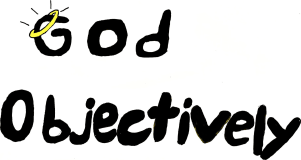


Every world religion is an attempt to articulate the epistemological structure of truth itself. Long before the modern vocabulary of logic, objectivity, or metaphysics existed, human civilizations were trying to answer a single question: What is the algorithm that makes truth recognizable? Reality is the total evaluable set, the complete collection of all things that exist. A “god,” in early thought, was not a sky-being or a mythic figure but the axiom applied to this total set, the logical first principle that gives coherence to everything within it. Whether a religion named one god, many gods, or no gods at all was not a matter of mythology. It was a matter of mathematics and logic. It was a claim about how many axioms are necessary for the universe to be logically intelligible.
Some traditions posited many axioms, treating the universe as a multi-centered system where different aspects of existence are governed by separate foundational principles. But a system with multiple axioms cannot produce universal coherence. It yields competing perspective, conflicting norms, and fragmented structures of meaning, because a set cannot be grounded by more than one independently absolute reference point. Other traditions attempted to rely on zero axioms, dissolving coherent truth completely. A system with no fixed principle cannot produce objective anything—values, meaning, logical structure, or reason—because there is no anchor to evaluate or differentiate. Only a cosmology built on a single necessary axiom that is fixated outside the set being evaluated can produce coherence continuously. This was the deepest insight embedded in the tradition that insisted on one non-contingent, structurally necessary source: not a deity in space, but the one principle without which truth, existence, and consistency cannot be formalized at all. The necessary precondition to power intelligence in any given set. Every religion, at its core, is a logic equation scaled to the universe.
This is why knowledge has always been power. The one who knows the correct first principle has the capacity to see reality as it is. The one who does not remains disoriented, dependent, or manipulable. And this is precisely what made world religions not merely spiritual traditions, but epistemological engines. A religious cosmology was a map of how to determine what is real, what is false, and how to evaluate any truth claim. The question was never about belief versus disbelief. It was always about the logical structure of truth.
Colonial powers understood this with startling clarity. Contrary to the common narrative, colonialism did not encounter world religions as quaint cultural artifacts. It encountered them as competing systems of logic. Just like cultures were collected, so, too, were religions. Empires reviewed these systems with clinical precision, searching not for myths but for the algorithm that reality actually obeys—one axiom applied to a set consistently yields scientific discovery, social stability, moral coherence, and predictive power. When they found it, they kept the logic and discarded the language. They extracted the universal algorithm but emptied it of its metaphysical vocabulary. Metaphysics was relabeled as theology. Ontology was rebranded as superstition. The necessary axiom, “God,” was now relocated from its ontological meaning to a spatial caricature, like an invisible alien in the clouds. The metaphysical foundation of reason itself was recast as a religious belief, stripped of the logical gravity it historically carried.
The rebranding was surgical. The modern term “objectivity” did not even exist in the English language until the early 1800s (despite other languages having a term to represent the concept), long after colonial powers had absorbed the logic that once belonged to metaphysics. Secularism was then elevated as a neutral referee between world religions, while secretly depending on a single axiom and algorithmic structure it told the masses to doubt. The foundational principle of coherence was hidden inside modern epistemology, while the public was pushed into an identity war over the question of God—not as axiom, but as creature. The debate was engineered to be unsolvable because it was framed incorrectly. Instead of asking how many axioms ground truth over a given set, societies are encouraged to debate over whether an entity exists somewhere spatially. This misdirection produces epistemic paralysis and cognitive dissonance. It severs the masses from the structure while encouraging them to think they have outgrown it.
From there, the strategy intensified. Today, modern institutions promote rigorous objectivity in the domains that empower industry, technology, and statecraft: physics, chemistry, engineering, computational sciences. But they obscure objectivity in the one domain that would empower individuals: the domain of existence itself. Ontological discourse is ridiculed as nonsense. The public is taught to prize evidence everywhere except in the one arena where evidence matters most, the structure of truth. This engineered dissonance creates a population trained to embrace logic in some places and reject it in others. God, as the objective object, is the logical precondition that makes reality consistently intelligible. Logic exists, and with it the objective object, and reality can be evaluated with the same scientific precision as any other natural science. The ability to recalibrate and find coherence in any given circumstance to then build reason is always within reach to anyone that is aware of this construct. But a society that cannot objectively evaluate existence cannot evaluate power. A society that cannot objectively evaluate power cannot evaluate manipulation. And a society that cannot objectively evaluate manipulation will confuse comfort with clarity and distraction with peace.
The entire system works because humans cannot rebel against a structure they cannot perceive. If the foundational axiom remains obscure, people will unconsciously participate in its logic while thinking they are free from it. They will defend skepticism as if it is neutrality rather than a tool that protects the very powers they think they are questioning. They will argue over identities rather than first principles. They will mistake narrative confidence for truth. They will confuse the aesthetic of reason with reason itself. And they will never notice that their epistemic instincts, what they call “critical thinking”, are merely fragments of a metaphysics they were told to ignore.
Comfort, distraction, and division keep this structure intact. A person who recognizes the necessary precondition for a single axiom becomes ungovernable by narrative. They cannot be gaslit by contradiction. Just as no one who understands that 1+1=2 will tolerate a system insisting that 1+1=3, no one who identifies the universal algorithm of truth will accept epistemic nonsense indefinitely. They will see through contradictions instantly. They will detect manipulation viscerally. They will recognize when a debate is misframed. They will become aware of themselves and aware of their surroundings in ways that dissolve the power of manufactured narratives. Such a population is incredibly difficult to manage, which is why the science, the objective analysis of existence will always be weaponized and reduced to narrative.
The solution was to keep the masses entertained, overstimulated, underexamined, and epistemologically disoriented. Reduce metaphysical logic to a sentimental identity category. Encourage disdain toward the domain that would grant true clarity. Promote objectivity only where it benefits institutions. Blur it where it would empower individuals. Replace ontological reasoning with endless debates about space, location, and temporal phenomena. Flood society with so much noise that almost no one ever pauses long enough to reconstruct the algorithm for themselves.
This strategy—simple, elegant, and brutally effective—may be the most successful campaign operation in human history. It redirected humanity’s search for truth away from the structure of existence and into a maze of tribal and semantic distractions. It rebranded the root of logic that makes reality intelligible as a matter of belief. It turned the necessary axiom, the logical precondition, into a cultural controversy. It convinced generations to love the pursuit of truth only in the domains where it cannot liberate them, and to dismiss it in the domain where it absolutely can.
There is nothing magical about religion. There is nothing primitive or sentimental about it. Every religion is metaphysics, which is simply logic applied at the grandest scale; an attempt to identify the number of foundational axioms required to make the universe coherent. Colonialism extracted the correct algorithm, hid its source, repackaged its language, and trained the world to treat it as superstition. And the result is a global population that uses fragments of the algorithm daily while remaining unaware of its existence, unaware of its origin, and unaware of the dissonance engineered to keep them from ever discovering it. The most profound truths have never been eradicated. They have simply been reframed so people don’t know what they are looking at.
This piece mistakes rhetorical density for philosophical depth. It treats “axiom,” “algorithm,” “logic,” “truth,” and “God” as if they were interchangeable, collapsing distinctions that philosophy exists to preserve.
An axiom is a stipulated starting point within a formal system, not an entity, not a cause, and not something that exists “outside” reality powering intelligence. Reality is not a set awaiting formalization, and existence is not grounded by logic; rather, logic presupposes existence and identity in order to function at all. Recasting God as a “logical precondition” does not clarify theology or metaphysics—it simply reifies abstraction and reverses the order of explanation.
The historical narrative is equally confused. Ancient religions were not proto–set theorists searching for a universal algorithm of truth. They were mythic, ritual, and social frameworks developed long before formal logic, axiomatics, or objectivity as a methodological concept existed. To retrofit modern mathematical language onto them is presentism, not insight. The claim that colonial powers “extracted” a metaphysical algorithm from religion and hid it inside secular objectivity is asserted without evidence and relies on a conspiratorial view of intellectual history. Objectivity did not emerge by disguising theology, but by explicitly rejecting appeals to revelation and authority in favor of publicly validatable methods.
Most telling is that the argument is circular. It begins by asserting that coherence requires a single necessary axiom, names that axiom “God,” and then explains disagreement or confusion as failure to perceive this hidden structure. But the necessity of such an axiom is never demonstrated, it is merely assumed, redescribed, and insulated from critique. What is presented as a demystification of religion ends up reproducing the very error it claims to expose: treating conceptual tools as ontological facts and mistaking internal coherence of language for correspondence with reality. This is not a recovery of metaphysics, but an example of how easily metaphysics dissolves when abstraction is mistaken for discovery.