

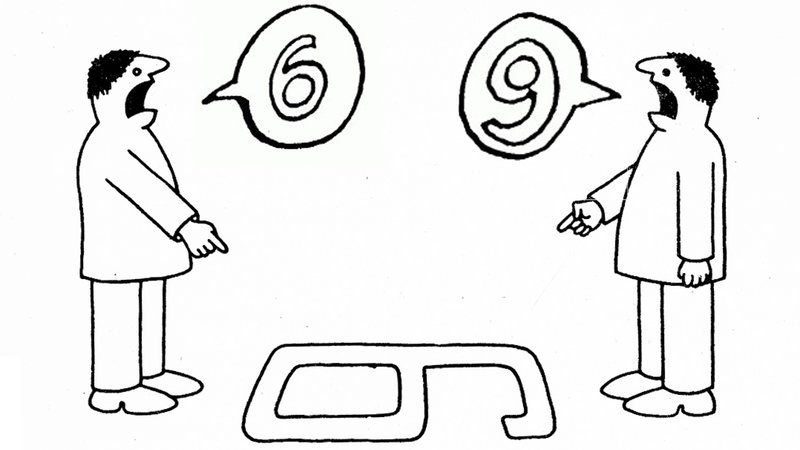
Truth is always singular in respect to its domain. This is not a slogan, but a structural fact about coherence itself. A “truth” that can be one of many is not a truth, it is a perspective. Objectivity requires a single, impartial reference point that stands outside the set of subjects it orders. The moment you introduce two or more “truths,” you have demoted them back down to subjectivity, because neither applies order universally across the set of subjects. And the moment you reduce singularity to zero, asserting that there is no truth, you also collapse into subjectivity, because the subjects have lost their compass entirely. In both cases of multiplicity and absence, truth ceases to be an anchor and becomes another relativistic construct.
But objectivity is not a static monolith; it is dynamic. We establish objective structures within domains (physics, mathematics, ethics, legal reasoning), yet as our understanding expands, what was objective within a limited domain becomes subjective in a larger one. This does not undermine truth. It reveals its pattern. Subjectivity always implies a common denominator, which then points to a single object that provides cohesion on the basis of that common denominator across the set.
The Collapse of Singularity into Multiplicity or Absence
A singular truth provides order because it is not one of the subjects, it is the criterion by which the subjects are measured.
If you multiply that truth, saying “there are many truths,” you turn them into competing viewpoints.
If you eliminate it, that “there is no truth,” you turn everything into chaos.
In both cases, the system loses its reference point, and knowledge becomes a power struggle between interpretations rather than a pursuit of coherence.
Let’s review some examples:
Two speed limits for the same road are not two truths; they are contradictory commands. They must be resolved by appealing to a higher authority that determines the real speed limit.
Two norths on a compass do not exist. If a compass has two needles pointing in different directions, the device is broken; the standard is gone.
Two definitions of time in physics—Newtonian and relativistic—were not “two truths.” Relativity subsumed Newtonian mechanics into a broader domain, showing Newton’s laws to be a useful subjective approximation within a limited scope.
Truth is singular within a domain, and if a domain expands, singularity must be restored at the higher level—provided that the singularity is a common denominator that equally applies across the set—to maintain logical coherence.
The Dynamism of Objectivity
Objectivity is not a fixed list of facts. It is a pattern of structure. As knowledge grows, domains widen and narrow, and what was formerly objective within a restricted scope may be revealed as a special case of a more general truth. This doesn’t break objectivity; it demonstrates its hierarchy.
Objective truths can be domain-bound, but the pattern of objectivity is invariant.
Examples that demonstrate this invariance:
Classical Mechanics vs. Relativity
Classical mechanics was objectively valid within the domain of low velocities.
Einstein did not undermine objectivity, he expanded the domain.
What was objective became subjective relative to a larger truth.Euclidean Geometry vs. Non-Euclidean Geometry
Euclid’s geometry was “the truth” until geometries were generalized.
The pattern held: each system has its singular axioms.
But the broader domain revealed the limitations of the original.Human Rights Principles
Domain-bound objectivity: “All humans have rights.”
Expanded domain: “All persons have rights,” raising questions about AI, animals, embryos, extraterrestrial life.
The structure remains: rights need a singular objective basis.
The domain changes; the objectivity pattern does not.
Objectivity is dynamic because inquiry is dynamic, but it always maintains its singular structure.
The Pattern of Objectivity Across Domains
At every level of inquiry, truth repeats the same shape:
A domain of subjects exists.
A singular reference point orders those subjects based on the common trait evenly shared across the set.
If the domain expands, the previous reference is absorbed into a higher singularity.
If the domain contracts, the reference must still stand above the subjects.
This is why truth always points back to a singular objective structure; not because humans want it, not because it feels good, but because logic collapses without it.
Whether we are discussing mathematics, physics, ethics, metaphysics, or existence itself, the same rule holds:
A system cannot define itself from inside itself.
It requires an ordering point above the system.
Multiple “truths” inside one system is incoherence.
Zero truths is nihilism and also incoherent.
One truth that evenly applies across the entire domain sets the standard for coherence in every line of reasoning.
The Ultimate Domain: Existence
The highest domain is existence itself.
This is where the stakes become existential.
We cannot empirically observe what lies beyond existence, but the pattern of truth remains unchanged:
Every domain requires a singular objective reference.
Every expansion of domain requires a higher singular reference.
The ultimate expansion, the total domain of being, demands a singular objective reference beyond it.
Every set of subjects implies a common denominator. In the highest domain, existence is that common trait. The objective point of reference, the Creator, applies evenly on this common trait of being. This Objective Object grants coherence across the set of existence, making existence itself objectively discernable. We can objectively analyze existence in the same way we study physics to determine rights. We do not have to rely on sentiment alone. Therefore, even when we do not have empirical evidence, the structure of coherence forces one conclusion:
Truth, at its highest level, requires a singular, transcendent source of order.
This is not theology. This is not myth. This is not cultural tradition. This is logic.
The age-old question “Does God exist?” is a categorical error, an attempt to empiricize what is fundamentally a logical necessity. It treats the foundation of coherence as if it were just another object inside the system to be inspected, measured, or believed in; reducing necessity to option.
God is not a hypothesis to be tested; God is the necessary precondition that makes testing, reasoning, and truth possible at all.
Every objective inquiry (mathematical, logical, scientific, ethical) ultimately points back to a singular, non-contingent reference point. Without this grounding, nothing holds:
order collapses into chaos,
consciousness collapses into incoherence,
truth collapses into perspective.
God, as the objective object of reality, is the necessary parameter that makes existence perceivable and intelligible. Without this foundational anchor, neither reality nor consciousness could ever arise, endure, or make sense.
Theology, as a category of study, distracts from this basic truth. It replaces ontological and epistemological examination with a carefully engineered narrative, colonizing “religion” and reducing it from the study of reality to an endless debate over doctrines.
Why This Matters
The myth of multiple truths is not merely a philosophical mistake; it is a political, moral, and existential danger.
Because when people believe that truth is plural or optional, power replaces objectivity, and rights become negotiable, justice becomes preference, reality becomes rhetoric, hierarchies remain hidden in the shadows, and humans become subjects of dominant narratives rather than subjects protected by truth.
The singularity, neutrality and hierarchy of truth is the sole safeguard against arbitrariness. It is the only coherent foundation for human rights. And it is the only structure that prevents the powerful from rewriting reality.
Truth is not authoritarian. Truth is liberating, precisely because it transcends all subjects—including the powerful.
Two questions: does a paradox constitute multiple truths within one domain? And, how can conscienceness become incoherence when conscienceness cannot be defined?