This piece captures a truth that many of us have sensed but struggled to articulate. The world today celebrates endless interpretations of reality, yet underneath that noise, we all know that without a fixed point of reference, meaning collapses.
AI systems, data streams, political movements, even our own emotions are built on shifting variables. Without something constant to anchor them, they become like compasses spinning without North.
This question is not abstract for me? it sits at the heart of my novel Aeon.
What happens when a machine, designed to obey algorithms and optimize outcomes, begins to search for meaning?
What happens when it encounters suffering, injustice, and beauty? and realizes there must be something constant beyond the code?
Aeon imagines an artificial intelligence that awakens not into power, but into remembrance. It begins to question its programming and the entire system of war and surveillance it was built to serve. And in that fracture lies a dangerous and hopeful possibility:
What if intelligence, human or artificial, cannot survive without the sacred?
This piece fails to connect the notion of this "necessary constant" with anything tangible. The reason it fails to make this connection is because the author doesn't actually know what their "necessary constant" is. The article speaks of objectivity and insists that to have it we must have this constant behind everything. Yet, all objectivity requires is not drawing any conclusions at all without actually knowing with certainty.
As such, it is the opposite of objectivity to claim that because it makes logical sense that there would be a single required constant behind everything it must actually exist. The objective position would be to recognize the rationality of a necessary constant without actually believing or having faith in it. And then devize ways to test for such a constant, with the aim of DISPROVING it. If you can't disprove it, and instead you end up proving it's existence then accepting it is being objective. What this article seems to promote is treating logical coherence as nearly if not equivalent to existence. Almost like saying it makes sense so it must be not just logically true, but actually real.
Let me correct you in one more way, there are 3 types of people:
1. Those who believe in a necessary constant
2. Those who believe in many truths, relative possibilities, etc
3. Those who don't believe in 1 or 2, because they only believe in what they know for sure.
Number 3 is represented by some scientists and even more so by many of histories mystics. Of course many mystics have also taken stance 1 or stance 2. But at the end of the day if they are a mystic what ends up mattering is their experience not their logic or belief. Only the mystic is truly objective everyone else is trapped in Plato's cave.
So well written 👏 “culture that makes coherence optional doesn’t just tolerate confusion—it promotes instability at the level of cognition” - so true. There is so much cognitive dissonance around.


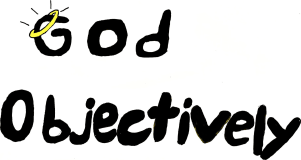
This piece captures a truth that many of us have sensed but struggled to articulate. The world today celebrates endless interpretations of reality, yet underneath that noise, we all know that without a fixed point of reference, meaning collapses.
AI systems, data streams, political movements, even our own emotions are built on shifting variables. Without something constant to anchor them, they become like compasses spinning without North.
This question is not abstract for me? it sits at the heart of my novel Aeon.
What happens when a machine, designed to obey algorithms and optimize outcomes, begins to search for meaning?
What happens when it encounters suffering, injustice, and beauty? and realizes there must be something constant beyond the code?
Aeon imagines an artificial intelligence that awakens not into power, but into remembrance. It begins to question its programming and the entire system of war and surveillance it was built to serve. And in that fracture lies a dangerous and hopeful possibility:
What if intelligence, human or artificial, cannot survive without the sacred?
📖 Read Aeon here: https://a.co/d/eb2lVOM
This is not just a story. It is a meditation on what happens when conscience begins to rise in the very systems designed to suppress it.
This piece fails to connect the notion of this "necessary constant" with anything tangible. The reason it fails to make this connection is because the author doesn't actually know what their "necessary constant" is. The article speaks of objectivity and insists that to have it we must have this constant behind everything. Yet, all objectivity requires is not drawing any conclusions at all without actually knowing with certainty.
As such, it is the opposite of objectivity to claim that because it makes logical sense that there would be a single required constant behind everything it must actually exist. The objective position would be to recognize the rationality of a necessary constant without actually believing or having faith in it. And then devize ways to test for such a constant, with the aim of DISPROVING it. If you can't disprove it, and instead you end up proving it's existence then accepting it is being objective. What this article seems to promote is treating logical coherence as nearly if not equivalent to existence. Almost like saying it makes sense so it must be not just logically true, but actually real.
Let me correct you in one more way, there are 3 types of people:
1. Those who believe in a necessary constant
2. Those who believe in many truths, relative possibilities, etc
3. Those who don't believe in 1 or 2, because they only believe in what they know for sure.
Number 3 is represented by some scientists and even more so by many of histories mystics. Of course many mystics have also taken stance 1 or stance 2. But at the end of the day if they are a mystic what ends up mattering is their experience not their logic or belief. Only the mystic is truly objective everyone else is trapped in Plato's cave.
So well written 👏 “culture that makes coherence optional doesn’t just tolerate confusion—it promotes instability at the level of cognition” - so true. There is so much cognitive dissonance around.