

We make claims about reality constantly. Governments classify people. Courts determine what counts as a person, a crime, a right, or an obligation. Scientists distinguish what exists from what does not. Economies classify labor, property, ownership, debt, and value. Computer systems add a layer of sophistication and classify users, objects, relationships, permissions, risks, and behaviors in addition to all the aforementioned claims.
Every one of these activities depends on assumptions about what exists, what matters, what relates to what, and what remains true regardless of who is looking.
In other words, every system has an ontology, a governing model that objectively constrains the system.
The problem is that we have largely lost the ability to recognize one. Most of us don’t know what ontology is. We have been unconsciously taught to think of ontology as something obscure, theological, or purely speculative. We are comfortable talking about knowledge, observation, data, evidence, interpretation, and methodology. We are much less comfortable asking the question underneath all of them:
What is the reality that these methods, observations, and interpretations we are actively using are supposed to be about?
This is not an academic inconvenience. It is a structural problem. Our intellectual civilization has become overwhelmingly epistemological. We have become experts at discussing how the blind men perceive the elephant while increasingly forgetting that there is supposed to be an elephant.
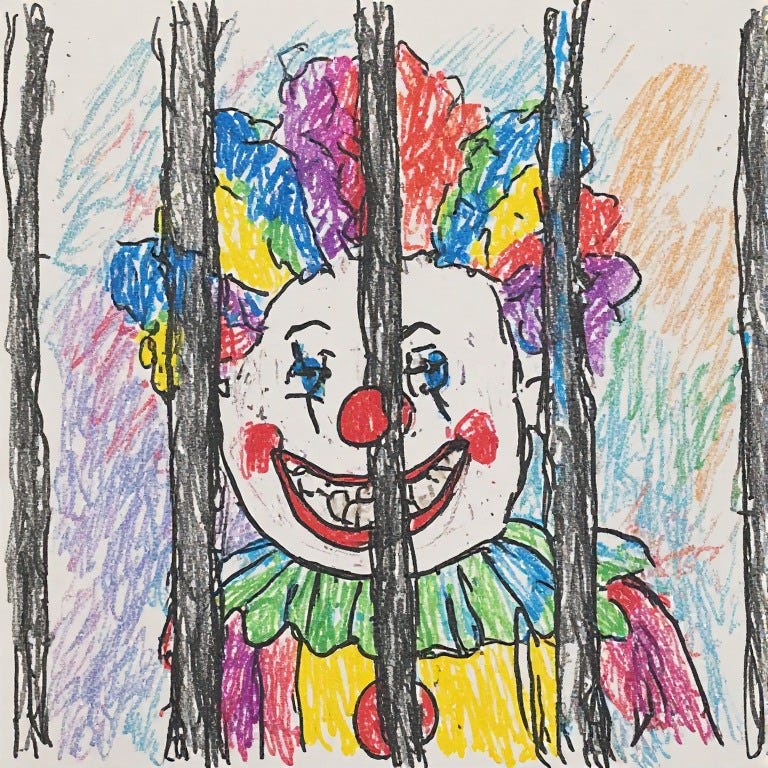
And when the blind men begin speaking as though their individual observations constitute the elephant itself, the inmates begin running the asylum.
The distinction between epistemology and ontology is straightforward. Epistemology asks questions about knowledge: How do we know? What counts as evidence? What are the limits of observation? How reliable is perception? How do we justify a conclusion?
Ontology asks what is actually there: What exists? What is fundamental? What relationships are real? What structures remain true independently of our observation?
We need both. Epistemology without ontology loses its object. Ontology without epistemology loses its ability to distinguish a genuine account of reality from an imagined one.
Ontology keeps epistemology honest because it reminds us that our descriptions are not automatically the things being described. Epistemology keeps ontology honest because it forces us to examine whether our claims about reality are actually justified.
The two disciplines are supposed to constrain one another. Instead, modern intellectual culture has increasingly allowed epistemology to swallow ontology.
This did not happen for no reason. One of the most important turning points was the philosophical revolution associated with Immanuel Kant. Kant was responding to a genuine problem: human beings do not encounter reality from nowhere. We encounter it through the structures and limitations of human cognition. That insight was important. But the distinction between the structure of our knowledge and the structure of reality became increasingly difficult to maintain.
The result was a philosophical environment in which the conditions under which the subject can know began to dominate the question of what can legitimately be said about the object itself. Today, reality has become increasingly approached through the conditions of consciousness. What began as a philosophical shift toward the knowing subject has spread far beyond philosophy into psychology, neuroscience, sociology, cognitive science, and the broader human sciences. Instead of beginning with the question of what reality is and then asking how consciousness encounters it, we increasingly begin with consciousness itself—perception, cognition, language, neural activity, subjective experience, and social conditioning—and attempt to reconstruct reality from there. The observer becomes the primary object of investigation, while the reality being observed increasingly becomes something understood only through the observer’s cognitive or neural framework. This can be useful for understanding the mechanisms of perception and knowledge, but it becomes a category error when the conditions of consciousness are treated as though they exhaust the structure of reality itself. Studying how the brain represents reality is not the same as establishing what reality is. Studying how humans construct meaning is not the same as establishing what is objectively meaningful. The map of consciousness is not the territory of reality.
So the problem is not that Kant asked epistemological questions. The problem is what happens when epistemology becomes the gatekeeper for ontology. The blind men have been given authority over the elephant. And that move has enormous consequences.
If reality is ultimately reduced to what can be experienced, observed, conceptualized, or constituted within consciousness, then the distinction between the thing being known and the conditions under which it is known begins to collapse. And that is a form of intellectual insanity if carried consistently.
Imagine applying the same standard elsewhere. Imagine a court saying that justice is nothing more than the consciousness of the people sitting in the courtroom. Imagine a scientist saying that the structure of a molecule is nothing more than the scientist’s perception of it. Imagine an engineer saying that a bridge has no objective structural properties outside the engineer’s conceptual framework.
We would immediately recognize the problem. The observer does not become the object merely because the object is encountered through an observer.
Yet this is precisely the direction our civilization has increasingly taken. We have allowed the conditions of consciousness—subjective experience, sentiment, preference, identity, perception, and social interpretation—to quietly become sources of ontological authority. What begins as a description of how human beings experience reality is smuggled into a prescription for what reality itself is, what a person is, what rights a person possesses, what constitutes harm, and what society is obligated to recognize as true. The result is not merely an abstract philosophical error. These assumptions are embedded into law, institutions, public policy, and international human-rights frameworks, where subjective or socially constructed categories can acquire the force of objective standards without the underlying ontology ever being made explicit or subjected to rigorous examination.
This is the central problem: sentiment is no longer merely being reported as a feature of human experience; it is increasingly being treated as an authority for defining the reality to which everyone else must conform. Once that happens, the distinction between what someone experiences, what society agrees upon, and what is objectively true begins to collapse. And when that distinction collapses at the level of human rights, the consequences are no longer confined to philosophy. The ontology is already governing people, it is simply operating without being named.
The consciousness becomes the final reference point. It becomes the elephant. It becomes ultimate reality.
And then, strangely, we abandon that principle the moment we need to build something. Because technology cannot function that way. A computer cannot operate on the assumption that reality is whatever the programmer happens to perceive. A database cannot function if the meaning of a field changes according to the consciousness of the person querying it. An operating system cannot function if the rules governing memory, permissions, processes, and relationships are merely subjective interpretations.
The machine needs structure. More precisely, it needs an explicit or implicit ontology. A computer system must distinguish entities. It must define relationships. It must establish categories. It must determine what properties belong to which objects. It must establish what actions are possible and what conditions constrain those actions. The system has to know, in operational terms, what kind of things it is dealing with.
That is ontology.
Consider a simple database. The raw data might contain numbers, strings, timestamps, identifiers, and other pieces of information. But the data alone does not tell the system what those things mean. A number can be a person’s age, a price, a latitude, a quantity, or an identification number. The schema gives the data structure. It says this is a person. This is an account. This belongs to that person. This transaction occurred at this time. This value represents money. This identifier refers to this particular entity.
The schema is therefore doing something ontological. It is defining the structure within which the data becomes intelligible. And this becomes more significant as systems become more sophisticated.
Modern institutions increasingly use enormous computational systems to classify and evaluate human beings. Algorithms assess creditworthiness, fraud risk, employment suitability, medical risk, consumer behavior, political preferences, social relationships, and countless other characteristics.
These systems do not merely “have data.” They have models of reality. They distinguish entities. They establish categories. They define relationships. They determine which characteristics matter. They establish rules for how those characteristics interact. They construct an operational ontology and then evaluate individuals according to it.
And here we encounter one of the great contradictions of our civilization:
Industry is allowed to define ontologies explicitly because its systems would fail without them.
But ordinary people have been culturally conditioned to treat ontology as something that cannot be meaningfully discussed outside private belief. Ontology has been theologized. Questions about what is ultimately real, what a human being is, what grounds human dignity, what makes a right objectively binding, and what reality ultimately answers to have been pushed into the category of religion. And once ontology is identified with theology, the separation of church and state creates a peculiar consequence: the public examination of ontology itself becomes culturally suspect.
The result is not that society becomes ontologically neutral. It becomes ontologically unconscious. Institutions still operate according to assumptions about what exists, what a person is, what counts as harm, what constitutes a right, and what standards should govern human beings. Those assumptions are simply no longer recognized as ontological claims. The ontology remains operational, while the public language needed to name, examine, and challenge it has been systematically gagged.
What is even worse, when someone attempts to name the ontology currently being operationalized—or proposes an ontology capable of restoring coherence—the immediate response is often to ask whether that ontology “exists” and to demand empirical evidence for it. Yet this litmus test is not consistently applied to the ontologies already embedded in our institutions and technologies. Industry does not wait for empirical proof of a database schema before defining the entities and relationships its system will operate upon. Computer scientists do not refuse to define an ontology because the ontology itself cannot be empirically observed as an object. They define the structure first so that the data can be interpreted at all.
Yet when someone attempts to make the ontological structure of society explicit, empiricism suddenly becomes the gatekeeper. The person is asked to empirically demonstrate the very framework that is supposed to make the observations intelligible in the first place. The ontology already operating in the system is granted the authority to remain invisible, while an alternative ontology is forced to justify its existence by standards that were never imposed on the incumbent ontology.
This is not neutrality. It is a double standard.
We therefore have a civilization in which ontology is everywhere in practice and almost nowhere in public literacy. The question is not whether an ontology is being used to evaluate and recognize reality. It is who gets to define it, what assumptions it contains, why those assumptions should be regarded as objectively binding, and why some ontologies are permitted to operate invisibly while others are prohibited from even being named. Secularism helps institutionalize this landscape while presenting itself as neutral, when in practice it does not remove ontology from public life—it merely makes the operative ontology invisible, unquestioned, and therefore harder to challenge.
That is a remarkable double standard. A corporation can create a data model describing what a person is within its system. A government can create legal categories describing what a citizen is. A technology company can construct a computational ontology describing how millions of people relate to one another. An artificial intelligence system can be trained to classify entities according to an underlying model of the world.
But when an ordinary person asks whether there is an objective structure underlying reality itself, the conversation is often immediately redirected toward religion.
Do you believe in God? Are you religious? Which scripture? Which denomination? Which theology? Does God [ontology] exist? Suddenly the ontological question has been transformed into an identity question.
That is the red herring.
The question of God is not fundamentally a question about religious identity. At its deepest level, it is a question about reality. What is ultimately real? What makes truth possible? What gives an objective claim—everyday facts—its binding force? Is there a reference independent of the subjects being evaluated? What must be true for anything else to be intelligible as true?
These are ontological and epistemological questions before they are questions of religious identity. And they are questions outside of empirical observation.
But our civilization has largely outsourced these questions to theology while simultaneously restricting theology to the category of private belief.
That creates a vacuum. And vacuums do not remain empty. If people cannot consciously examine ontology, they will still operate within one. They will simply inherit it unconsciously. This is why ontological illiteracy is so dangerous.
There is no such thing as operating without an ontology. Atheism, agnosticism, deism, and similar positions therefore do not escape ontology; they merely conceal, constrain, or redefine it. Declining to name an ontology does not make a person ontologically neutral any more than declining to name a schema makes a functional computer system schema-free. The assumptions are still there and are prevented from being named.
The only options are operating with a transparent ontology or an implicit one. The difference is whether you have received the education to identify an ontology beneath any system.
We often imagine that empiricism allows us to escape metaphysical assumptions. It does not. Empirical observation gives us data. It does not, by itself, tell us what the data means, what entities exist, what counts as an entity, which relationships are fundamental, or what structure the observations presuppose.
The moment we organize observations into a meaningful system, assumptions enter. Data requires structure. Structure requires distinctions. Distinctions require categories. Categories require assumptions about what is being distinguished.
That is ontology. Empiricism can tell us what we observe. It cannot simply erase the ontological structure required to identify what we are observing in the first place.
The irony is that our culture often treats ontology as illegitimate precisely because it cannot always be reduced to empirical observation, while simultaneously building enormous systems that depend on ontological assumptions at every layer.
Computer science provides an almost perfect demonstration. No serious engineer says they don’t need an ontology, that they will simply collect data and let reality emerge. That would be absurd.
The system has to be modeled. The entities have to be defined. The relationships have to be defined. The constraints have to be defined. The rules have to be defined. The system then evaluates incoming information according to that structure.
And if the governing ontology is wrong, the system can produce perfectly consistent answers to the wrong questions. That last point is crucial.
A system can be internally coherent while being ontologically mistaken. This is why the schema matters. You can have flawless calculations operating on a fundamentally defective model. You can have perfect execution of the wrong assumptions.
You can have enormous quantities of accurate data organized according to a false conception of what the data represents. The more powerful the system becomes, the more dangerous that mistake becomes.
Now apply this to civilization itself. We have built enormous intellectual, legal, economic, technological, and political systems on top of assumptions about human beings and reality. Yet the average person is not educated in ontology. The average person is not even particularly educated in epistemology.
That is an astonishing situation. Our entire intellectual civilization depends heavily upon theories of knowledge, yet most people have never seriously studied epistemology. We have experts in medicine, law, economics, engineering, psychology, computer science, political science, sociology, and countless other disciplines. But expertise in a specialized field does not automatically confer expertise in the assumptions underlying knowledge itself.
A person can become extraordinarily competent within a discipline while never asking what conception of reality the discipline presupposes. And if epistemology is already largely invisible to the average person, ontology is even further removed.
The result is a civilization full of specialized intelligence operating inside largely unexamined assumptions. We know more and more about individual pieces of the system while becoming less capable of asking what system we are actually inside.
This is how the inmates end up running the asylum.
The problem becomes even more pronounced when we look at theology. Theology is culturally prominent, but that does not mean theological literacy is the same thing as ontological or epistemological literacy.
People know the names of religions. They know denominations. They know doctrines. They know arguments for and against God’s existence as a record on the table. They know which side they are supposed to identify with. But many people have never asked what kind of claim a particular theological doctrine actually is.
Is it an ontological claim? An epistemological claim? A historical claim? A symbolic claim? A psychological claim? What would make the claim true? What would make it false? What kind of evidence could distinguish one interpretation from another? What conception of reality does the doctrine presuppose? What conception of knowledge does it employ?
These questions are rarely examined with the rigor we would expect in other intellectual disciplines. Today, being a religious authority does not make someone an expert in ontology or epistemology. A person can be deeply familiar with scripture, tradition, ritual, jurisprudence, numerology, or religious history while possessing little formal understanding of the disciplines required to analyze claims about reality and knowledge. That matters enormously because each religion’s definition of God is meant to define the ontology of what reality ultimately is. If someone claims to explain God, they are making claims about what truth is, how truth works in how it relates to ultimate reality, and revelation, human nature, morality, or the purpose of existence are making claims that are unavoidably ontological and epistemological in nature.
Knowing religious vocabulary is not the same thing as understanding those claims. And when the people regarded as theologians cannot rigorously distinguish ontology from epistemology, we should be concerned. Because a person can manipulate a doctrine, whether intentional or not, without actually understanding the structure of the claim. That is not evaluation. It becomes manipulation.
This is another reason the reduction of the God question to theology is so damaging. Theology becomes the battleground. Atheists attack theology. Theists defend theology. Religious groups defend their identities. Other religious groups attack those identities. Everyone argues about scriptures, institutions, historical personalities, interpretations, and traditions.
Meanwhile, the deeper question sits untouched.
What is truth, and how is truth possible?
That question cannot be settled by identity. It cannot be settled by counting believers. It cannot be settled by consensus. It cannot be settled merely by pointing to what someone happens to experience. And it cannot be empirically proven because it is not a topic about temporality to begin with. Theology, as an academic discipline, does not aim to understand the nature of truth or how truth remains a stable feature of reality. Instead, it often seems to compare fundamentally different kinds of claims—like apples and oranges—without resolving the underlying differences itself.
The underlying question is whether there is an objective reference independent of the subjects making the claim. Are the factual claims we encounter every day ultimately grounded in a mythology of competing masters—demigods, wills, and subjective authorities capable of intervening in or authoring what exists—or are they grounded in a stable, singular reference (an objective reference) that remains invariant regardless of who observes it? If the latter is true, then our task is not to manufacture truth but discover it by bringing our models into greater coherence with that reference, using it to separate signal from noise and fact from interpretation. In other words, are the facts we experience ultimately products of perspective, or are our perspectives answerable to something objectively binding?
This is where ontology becomes unavoidable. Either the objective ontology, the schema, of reality is mythology of multiple ultimate contenders competing for the top, where things remain continuously subjective, or the objective ontology is stable, consistent and terminating, not devolving into infinite regress, which places us back into the former position of subjectivity. If there is no objective reference, then ultimately there is no external standard capable of distinguishing reality from a sufficiently coherent interpretation of reality. In other words, we are saying that 1+1=2 is not really binding, even though we know it is. The blind men become the elephant. Everyone has a perspective, and then perspective becomes reality. What that implies is that we can make 1+1=3. Yet, it doesn’t take a genius to know that we can’t. This is one of the strange destinations of modern thought. And it points out how complicated we have made the topic in order to quickly apply a double standard. Reality’s ultimacy matters in science to correct us, but we quickly say it is an illusion when we use language that says human cognition is reality.
We begin with a reasonable observation: human beings have limited perspectives. Today, we institutionally end by treating the limitation of perspective as evidence that there is no objective reality beyond perspective. And many in the theology camp will agree with that conclusion, while saying in the same breath that they believe in God, that they believe God exists, while an atheist may acknowledge that there is something that objectively binds our collective perspectives.
That does not follow. But it illustrates just how thick the dissonance is in the modern age.
The fact that I cannot see the whole elephant does not mean the elephant is produced by my blindness. The elephant remains the elephant. My epistemic limitations do not become ontological authorship.
And this distinction is desperately needed. Human beings are participants in reality, not its authors. We arrive here after not existing. We remain here for a limited period. We encounter a world already structured before our individual consciousness appeared. We do not choose the existence of gravity, time, biological limitation, mathematical relations, mortality, or the basic conditions under which our choices become possible. And eventually, we leave. The world does not disappear with us. And any footprint we leave behind remains a datapoint on the table. It does not become the table’s schema.
Yet we increasingly use language that quietly reverses this relationship. We speak as though categories become real because we constructed them. We speak as though consensus creates coherence. We speak as though naming something gives us authority over what it is. We speak as though reality is a social product simply because some aspects of our descriptions are socially constructed.
This confuses the map with the territory. Humans certainly create institutions, conventions, languages, classifications, and models. But the ability to create a model does not mean we created the reality that constrains the model.
We create consensus, but we do not create coherence. Consensus can produce a bubble of agreement; coherence, by contrast, requires constraint. Only coherence can yield facts, because it must correspond to reality rather than merely reproduce our shared assumptions. In this sense, God—understood as the objective ground—is important: God anchors human cognition in reality and prevents it from collapsing into a self-affirming bubble.
A computer system cannot be convinced that an invalid operation is valid because enough programmers voted for it. A bridge cannot be made structurally sound by consensus. A mathematical contradiction does not become coherent because everyone agrees to call it coherent.
Reality does not take a vote. It constrains us and always will. That is precisely why objectivity matters.
Objectivity is not simply agreement among subjects. It is the possibility of reference beyond the subjects. And once that distinction is understood, the problem with an epistemology-only civilization becomes obvious.
If everything that exists is just the blind men, then every perspective competes with every other perspective. If we have an elephant, then the perspectives can be evaluated in relation to something outside themselves.
That is what ontology provides. It gives epistemology something to answer to.
This does not mean human beings gain perfect knowledge of ultimate reality. We do not need perfect knowledge in order to recognize that knowledge is answerable to something beyond itself. The elephant can remain partially unknown while still functioning as the reference point.
In fact, that is precisely how much of science works. Scientists do not need exhaustive knowledge of an object before they can recognize that their models are being constrained by something outside their minds. They formulate models. They test them. They discover where they fail. They revise them. Reality remains the judge.
Science works because the scientist does not get to declare the world into existence. The world pushes back. That pushback is precisely what makes knowledge possible.
And technology depends on the same discipline. Science discovers conditions. Technology exercises freedom within those conditions.
A computer works because engineers submit to the structure of reality rather than negotiate with it. A processor does not care about philosophical fashion. A database does not care whether its underlying ontology is politically convenient. A mathematical relation does not change because the programmer has a different identity. Technology is extraordinarily successful precisely because it takes ontology seriously.
This makes our cultural double standard even more difficult to ignore. We demand ontological rigor from machines while tolerating ontological confusion in ourselves. We require explicit models from computer systems while refusing to acknowledge that our institutions and civilizations also operate according to models. We allow corporations to classify populations according to sophisticated ontologies while ordinary citizens remain unable even to identify the ontology governing their own society. We train artificial systems to recognize patterns while failing to train human beings to recognize the assumptions underneath those patterns.
We have built machines that can read structures while becoming a civilization that cannot read its own. That is ontological illiteracy, and it is not harmless.
Because when ontology becomes implicit, whoever controls the model quietly controls the evaluation. If you define what counts as a person, you have consequences. If you define what counts as harm, you have consequences. If you define what counts as intelligence, you have consequences. If you define what counts as normal, valuable, rational, productive, healthy, dangerous, successful, or meaningful, you have consequences.
The question is not whether an ontology exists. The question is whose ontology is operating, what assumptions it contains, and whether those assumptions are objectively defensible.
That is the question we have largely stopped asking as a civilization.
Instead, we argue over outputs. We argue over political identities. We argue over religious identities. We argue over cultural identities. We argue over individual experiences. But we rarely climb down to the structural layer beneath them.
We have become experts at fighting over the data while ignoring the schema. And that is exactly how a civilization can become extremely sophisticated while remaining intellectually illiterate about its own foundations.
The answer is not to abolish epistemology. It is to put epistemology back in its proper relationship with ontology.
The blind men are necessary. They are not the problem. Their observations matter. Their limitations matter. Their methods matter. Their disagreements matter. But the blind men cannot be permitted to declare that the elephant does not exist merely because they cannot perceive it completely. Nor can the elephant be reduced to whatever one blind man happens to touch.
The epistemological perspective must remain answerable to the ontological object. And ontology must remain answerable to epistemological discipline.
That is the balance modern civilization has lost. The result is a civilization where ontology has been theologized and separated from public intellectual inquiry, epistemology has expanded beyond its proper domain and speaks for ontology, while sophisticated institutions continue to construct and deploy ontologies without the public having the vocabulary to recognize them.
The irony is almost unbearable. We have not escaped metaphysics. We have merely become metaphysically unconscious. There is always a structure underneath the system. Always. There is always an assumption about what exists. There is always an assumption about what matters. There is always an assumption about what is independent and what is dependent. There is always an assumption about what remains true when circumstances change. There is always an assumption about what can serve as a reference beyond the observer. The question is whether we are conscious of those assumptions and whether they survive scrutiny.
That is why the problem is larger than religion. Religion has become the convenient battlefield because it gives people something visible to fight over. But the deeper issue precedes the battlefield.
Before asking which religion is true, we need to be capable of asking what truth is. Before asking what someone believes about God, we need to be capable of asking what kind of reality could be making the facts we experience in normal life binding versus what would make it incoherent. Before arguing over revelation, we need to understand the relationship between the knower and the known. Before debating theology, we need enough epistemology to understand what constitutes knowledge and enough ontology to understand what knowledge is supposed to be knowledge of.
Otherwise we are simply handing the inmates the keys. The civilization that refuses to examine ontology does not become neutral. It becomes vulnerable.
Someone else will define the categories. Someone else will define the relationships. Someone else will define the reference points. Someone else will decide which assumptions are invisible and which are allowed to be questioned. And someone else will do the due diligence of collecting the data to apply those definitions towards.
And once those assumptions become embedded in law, education, economics, technology, algorithms, and institutions, they can govern millions of people without ever being recognized as ontological claims.
That is the shit storm we are living through. We have a civilization capable of building machines that depend upon explicit ontologies while producing human beings who are barely literate in ontology or epistemology.
We have institutions that operationalize models of reality while telling the public that questions about ultimate reality belong to private belief that remains inconclusive.
We have allowed theology to monopolize the language of ultimate reality and then used the resulting confusion as a reason to exclude ultimate reality from serious public inquiry.
We have allowed epistemology to speak for ontology.
We have allowed consensus to masquerade as coherence.
We have allowed the map to speak as though it created the territory.
We have built the sophisticated weaponry to wipe out mankind at the push of a button, but cannot clearly articulate what a fact is and how truth continues to remain a stable phenomenon of reality.
And then we wonder why everyone is fighting over reality.
The solution is not more ideology. It is intellectual literacy. We need to learn to see the layers again. We need to distinguish the observer from the observed. We need to distinguish knowledge from reality. We need to distinguish a model from the thing modeled. We need to distinguish consensus from coherence. We need to recognize that every system rests upon an ontology, whether or not the people operating it know what that ontology is. We need to stop arguing whether the ontology exists or is real and demand proof in order to take it seriously. Instead, we need to relearn the capacity to determine if an ontology is incongruent or coherent with what we are experiencing.
Most importantly, we need to recover the ability to ask what reality itself requires of our models.
The elephant is still in the room. In fact, ultimate reality is the metaphorical room. The metaphorical room is objective in relation to what exists. It is not merely another object waiting to be discovered alongside everything else. It is the reference within which everything else becomes intelligible: singular, external, invariant, non-derived, independent, and universal in relation to what exists. That is not an object to grasp, that is a definitive model of what reality ultimately is in relation to all of us.
The room does not need to be invented by the blind men, nor does it become real only after they agree that it exists. It does not need to be “proven” in the same sense that an object within the room must be empirically demonstrated. It needs to be acknowledged as the reference that makes all of our evaluation possible at all. Once acknowledged, it can function as a compass—a standard against which our observations, models, interpretations, and competing claims can be evaluated.
The question is whether we are willing to stop pretending that our inability to see ultimate reality makes us its author. We are not the authors of reality. We are participants in it. Everything that exists is a participant—contingent, determinate, and situated within the reality it did not create.
What makes those countless participants intelligible as a coherent reality, as a universe, is not another arbitrary data point within the set. It is the necessary reference by which the data points can have structure and coherence in the first place. Data without a schema is just a collection of values, it does not explain the structure that makes those values intelligible as related information. In the same way, contingent things do not author the objective structure by which they can be understood as a coherent reality.
The necessary reality is therefore not another participant in the system. It is the global reference that makes the system intelligible. And precisely because it is not one more thing within the set, it cannot be characterized in the same terms as the things that exist within it. What makes the whole coherent cannot itself simply be another arbitrary component of the whole. It is unlike anything that exists. What it is, we do not know—and we will never know—so long as we are participants in this reality. This is what makes facts possible and stable: truth is not something we manufacture through perception or consensus, but the coherence between what we claim and the objective reality that makes those claims true. That objective reality can only be ontologically described. It cannot be identified any other way, otherwise its terminal position unravels back into subjectivity once again.
And until we come to terms with that distinction, we will continue building increasingly sophisticated systems on top of increasingly unconscious assumptions. We will become better and better at manipulating reality while becoming less and less capable of recognizing what reality ultimately is.
That is not intellectual progress. That is an intellectually sophisticated form of illiteracy.
We are an ontologically illiterate civilization. And the inmates are running the asylum.